
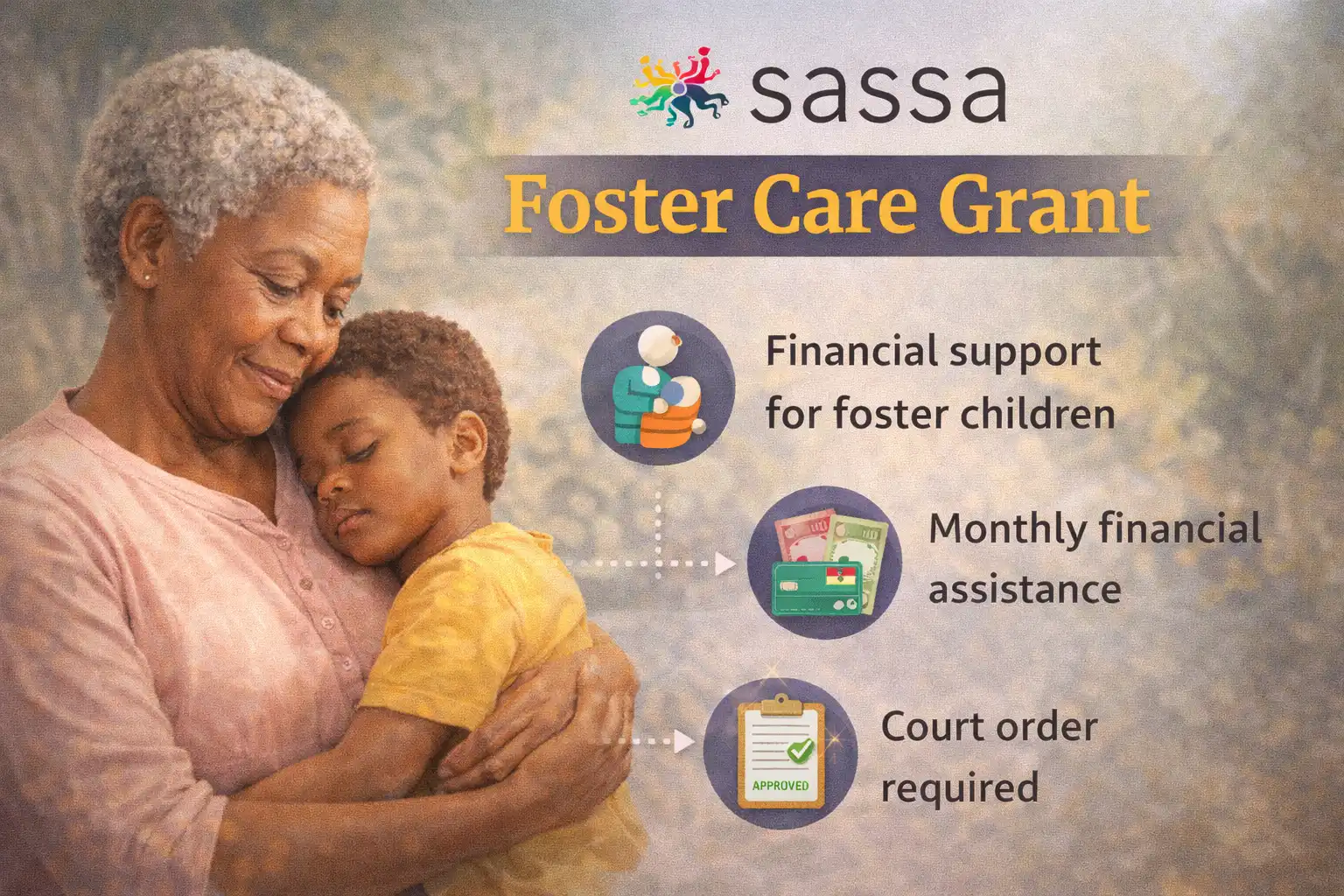
The South African Social Security Agency (SASSA) Foster Care Grant is a vital form of financial support designed to help foster parents care for children who cannot live with their biological parents. This grant provides monthly financial assistance to cover the basic needs of foster children, including food, clothing, education, and healthcare. Understanding the eligibility criteria and application process is essential for those considering fostering or already caring for foster children in South Africa.
Purpose of the Foster Care Grant
The primary purposes of the Foster Care Grant include:
Financial Support: Providing monthly financial assistance to help foster parents meet the basic needs of the foster child, including food, clothing, shelter, and education.
Child Welfare: Ensuring that children in need of alternative care are placed in safe, loving homes where their physical, emotional, and developmental needs can be met.
Encouraging Foster Care: Reducing the financial burden on foster parents to encourage more families to open their homes to children in need.
Legal Framework: Supporting the formal foster care system by providing grants only to legally recognized foster placements approved by the Children’s Court.
Foster Care Grant Eligibility Requirements
To qualify for the SASSA Foster Care Grant, both the foster parent and the foster child must meet specific eligibility criteria as outlined by the Department of Social Development and SASSA.
Requirements for the Foster Child
1. Age Requirement: The child must be under 18 years of age.
2. South African Residency: The child must be a South African citizen, permanent resident, or refugee living in South Africa.
3. Court Order: There must be a valid court order from the Children’s Court placing the child in foster care.
4. Not Receiving Other Grants: The child should not be receiving the Child Support Grant or Care Dependency Grant (only one grant per child).
5. Living with Foster Parent: The child must be residing with the court-appointed foster parent.
Requirements for the Foster Parent
1. Legal Foster Parent: You must be legally appointed as a foster parent by a Children’s Court order.
2. South African Residency: You must be a South African citizen or permanent resident.
3. Primary Caregiver: You must be the primary caregiver of the foster child and the child must live with you.
4. Not Receiving Remuneration: You should not be receiving payment from another source for caring for the child (e.g., employed by a children’s home).
5. No Other Grants: The foster parent should not already be receiving a grant for the same child through another program.
How Much is the Foster Care Grant?
As of 2026, the SASSA Foster Care Grant amount is R1,250 per month per child. This amount is reviewed and adjusted annually by the South African government, typically announced during the national budget speech.
| Grant Type | Monthly Amount (2026) | Annual Total |
|---|---|---|
| Foster Care Grant (per child) | R1,250 | R14,160 |
| Two Foster Children | R2,360 | R28,320 |
| Three Foster Children | R3,540 | R42,480 |
Important Note: Foster parents can receive the grant for multiple foster children if they are caring for more than one child. Each child requires a separate court order and grant application.
How to Apply for the Foster Care Grant
Applying for the Foster Care Grant involves two main processes: obtaining a foster care court order and applying for the grant itself. Here’s a comprehensive step-by-step guide:
Step 1: Become a Legal Foster Parent
Before applying for the grant, you must be legally recognized as a foster parent by the Children’s Court.
- Contact the Department of Social Development or a registered Child Protection Organization.
- A social worker will conduct a home assessment, including interviews and background checks.
- Submit required documents such as ID, proof of residence, income details, and references.
- The social worker submits your application to the Children’s Court.
- Attend the court hearing and receive a foster care court order (valid for two years).
Step 2: Apply for the SASSA Foster Care Grant
After receiving the court order, apply at your nearest SASSA office.
- Visit the SASSA office and complete the application form.
- Submit all supporting documents.
- Biometric verification may be required.
- Processing takes about 30–90 days.
- You will be notified of approval and payment start date via SMS or letter
Required Documents for Application
When applying for the Foster Care Grant at SASSA, you need to bring the following documents:
Documents for the Foster Parent
- Your valid South African ID document or permanent residence permit
- Proof of residence (utility bill, affidavit, or letter from traditional leader)
- Your bank account details (bank statement, cancelled cheque, or bank card)
- Marriage certificate (if applicable)
- Death certificate of spouse (if applicable)
Documents for the Foster Child
- Child’s birth certificate (unabridged)
- Child’s ID document (if 16 years or older)
- Child’s clinic card or medical records
- Proof that the child is not receiving another grant
Most Important Document
Critical: The court order from the Children’s Court appointing you as the foster parent is absolutely essential. Without this document, your application cannot be processed.
First Payment
Your first payment will be made within three months of your application approval. This payment will include any arrears (backdated payments) from the date the court order was issued, not from the application date.
Foster Care Grant Duration and Renewal
How Long Does the Grant Last?
The Foster Care Grant is linked to your court order, which is typically valid for two years. The grant will continue until:
- The child turns 18 years old
- The court order expires (after 2 years)
- The child is no longer in your care
- The child is adopted
- The foster care arrangement is terminated by the court
How to Renew the Grant
Before your court order expires, you must apply for renewal if the child is still in your care and still needs foster care.
Step 1: Contact Social Worker
At least three months before the court order expires, contact your social worker to begin the renewal process.
Step 2: Home Reassessment
The social worker will conduct another assessment to ensure the placement is still in the child’s best interest.
Step 3: Court Renewal
A renewal application will be submitted to the Children’s Court, and you may need to attend another hearing.
Step 4: New Court Order
If approved, a new court order will be issued for another two years.
Step 5: Update SASSA
Take the new court order to SASSA to update your grant records and ensure continued payments.
Important: Start the renewal process early. If your court order expires before renewal, your grant payments will stop until a new order is obtained.
Responsibilities of Foster Parents
Receiving the Foster Care Grant comes with important responsibilities to ensure the well-being of the foster child:
Use Grant for Child’s Needs: The grant must be used for the child’s benefit, including food, clothing, education, healthcare, and other necessities.
Keep Records: While you don’t need to submit detailed financial reports, it’s good practice to keep receipts for major expenses related to the child.
Provide Proper Care: Ensure the child receives adequate nutrition, healthcare, education, and emotional support.
Maintain Safe Environment: Keep your home safe and conducive to the child’s development.
What Can Stop or Suspend the Foster Care Grant?
Your Foster Care Grant may be stopped or suspended under the following circumstances:
| Reason | Details |
|---|---|
| Child Turns 18 | The grant automatically stops when the child reaches 18 years of age |
| Court Order Expires | Grant stops if court order is not renewed before expiration |
| Child No Longer in Care | If the child returns to biological parents or moves to another placement |
| Adoption | Grant stops when child is legally adopted |
| Death of Child | Grant stops from the month following the child’s death |
| Fraud or Misrepresentation | If false information was provided during application |
| Child Receives Another Grant | If the child begins receiving Child Support Grant or Care Dependency Grant |
| Foster Parent Dies | Grant stops and child is reassessed for new placement |
